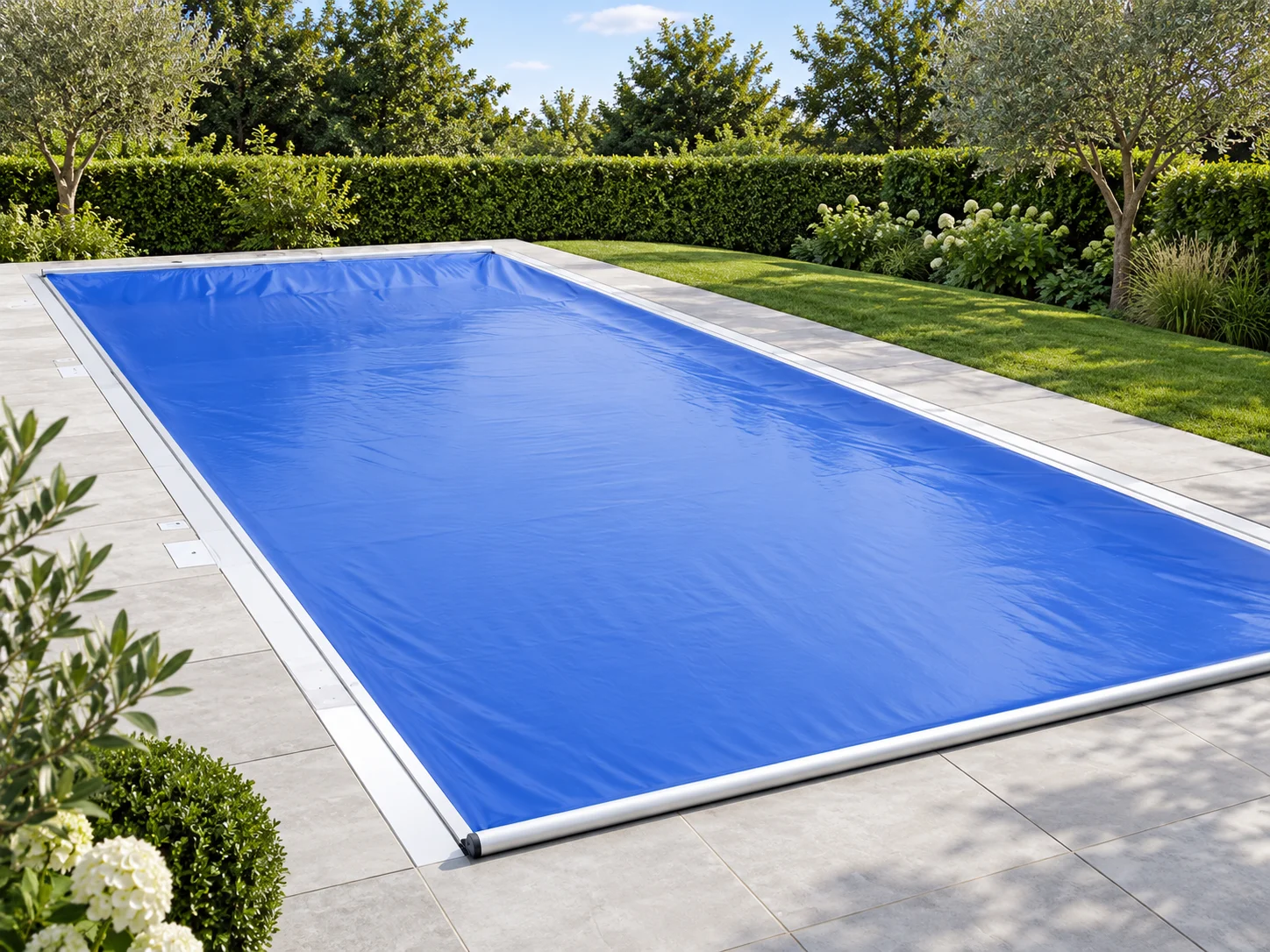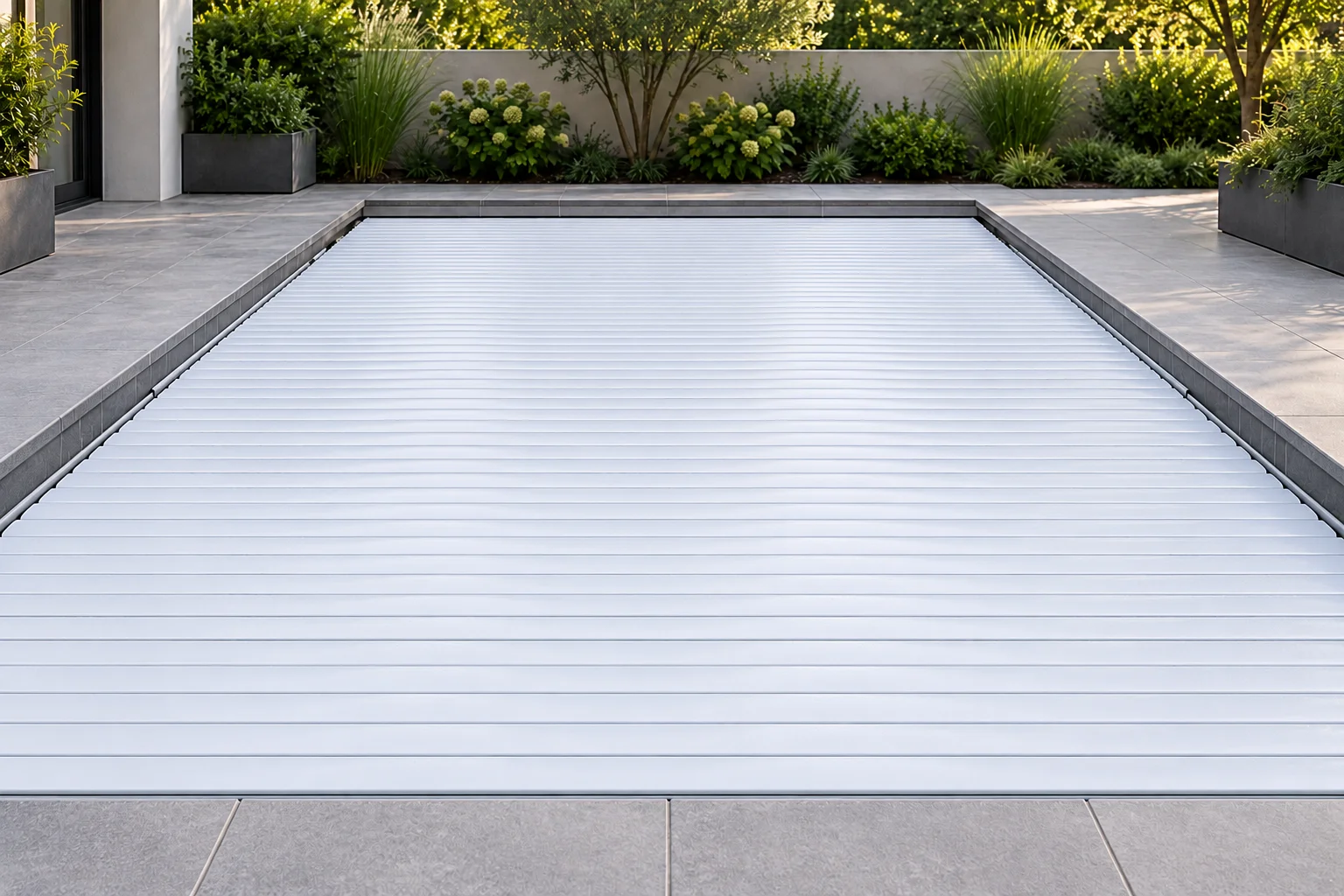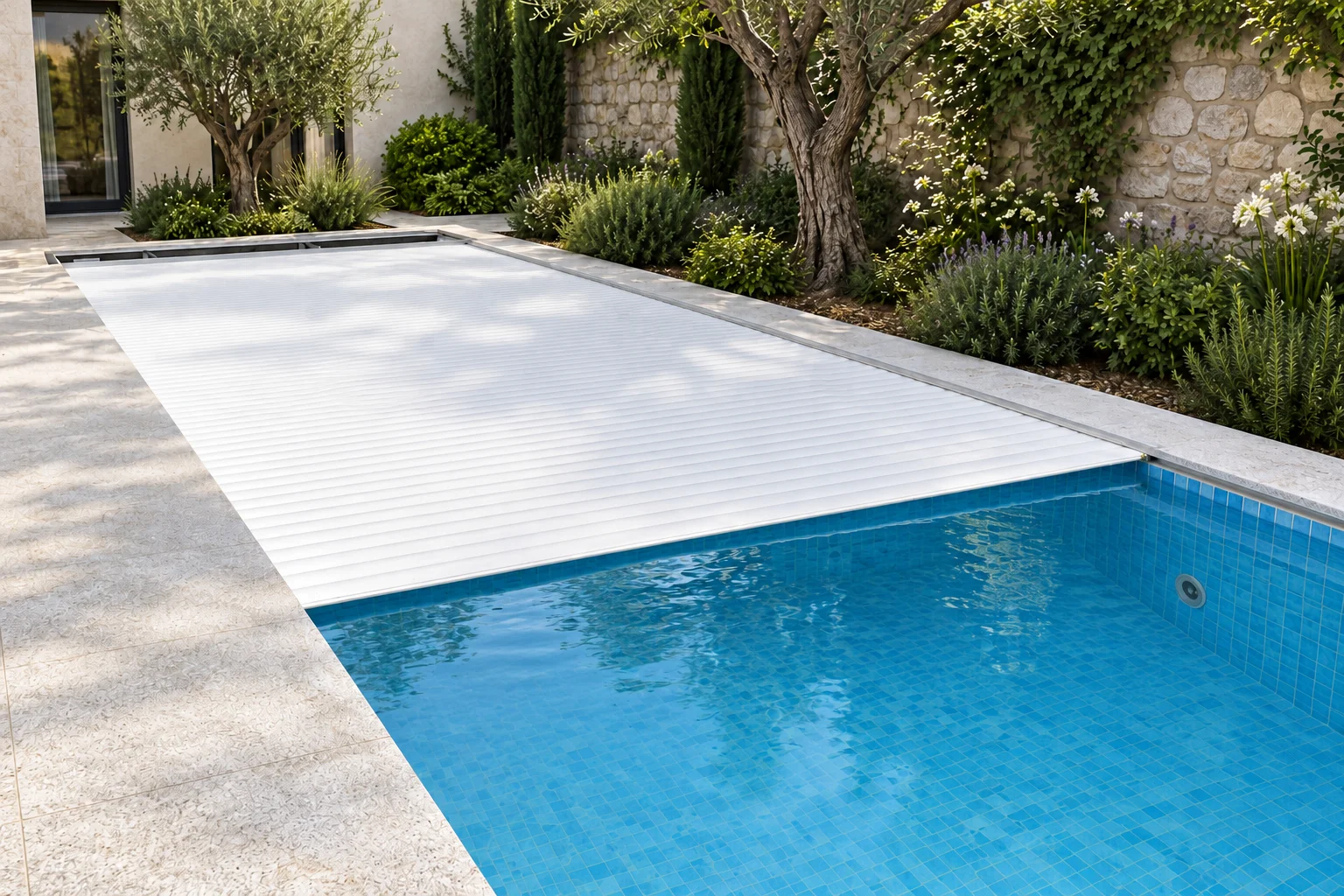
Record the Water Opening and the Surrounding Area
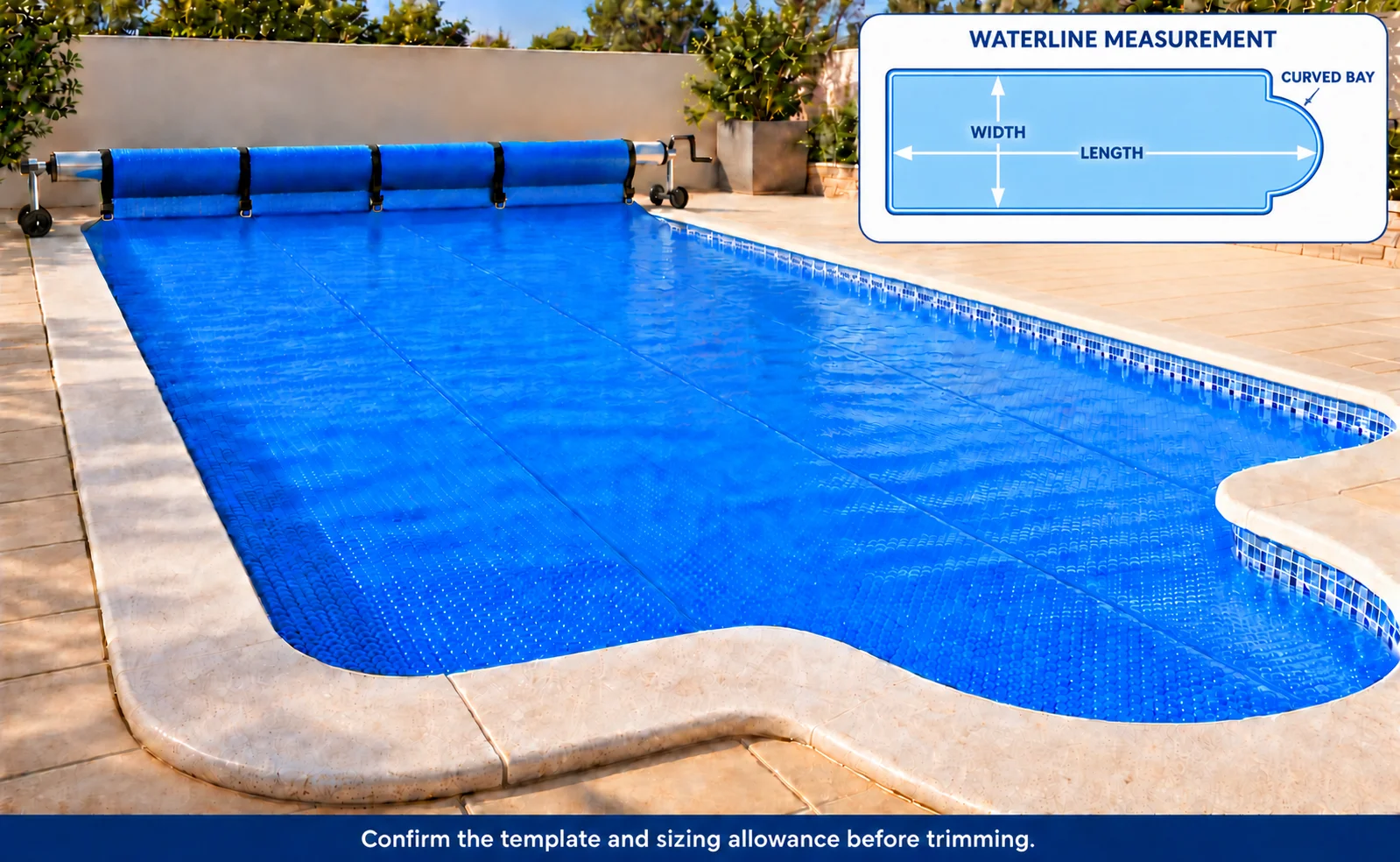
Mark the approximate pool length and width with the unit shown clearly. Add steps, curves, ladders, overflow edges and equipment that could affect the covering area. For an irregular pool, a rough plan is more useful than describing it only as freeform.
Show the Proposed Storage and Movement Space
Identify where a roller, housing, sliding deck or folding mechanism could go. Measure the adjacent clear space and note walls, height changes, fences and objects that cannot be moved. These details help distinguish a cover that fits the water from a system that can operate on the site.
Take Photos That Explain the Constraints
An overview from each end, the pool edges, equipment and the proposed storage area provide a useful start. Avoid sending personal information or people’s faces when they are not relevant. Photos do not replace dimensions, but they can identify the next measurement that is needed.
Separate Preliminary and Final Dimensions
Initial dimensions support product discussion and a preliminary quotation. They are not automatically approved manufacturing or construction dimensions. Final measurement responsibility, configuration and production dimensions must be confirmed through the actual order process.
Send the Destination and Project Context
Include delivery city or postal code, whether the pool already exists, the quantity and your role in the project. If a local installer is involved, share their relevant constraints. You may contact PoolCoverKits even if the cover type has not yet been chosen.