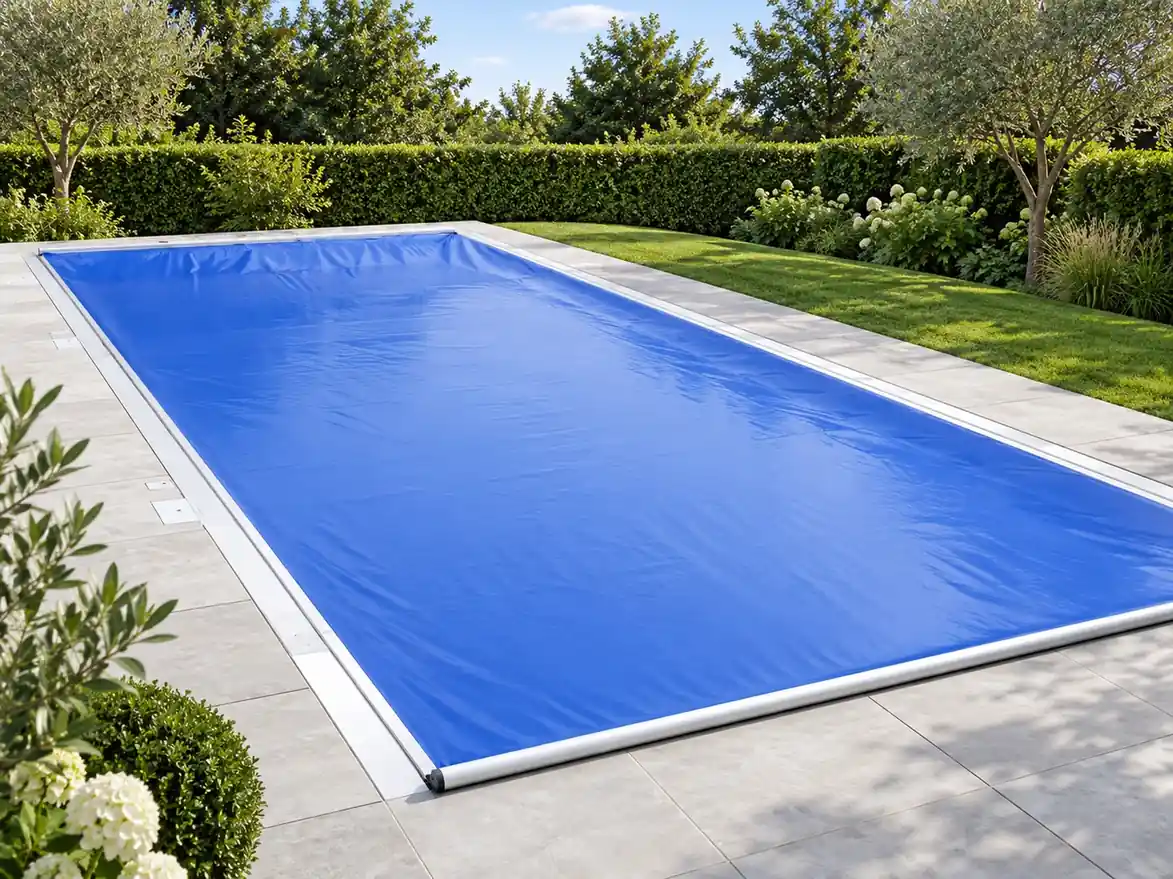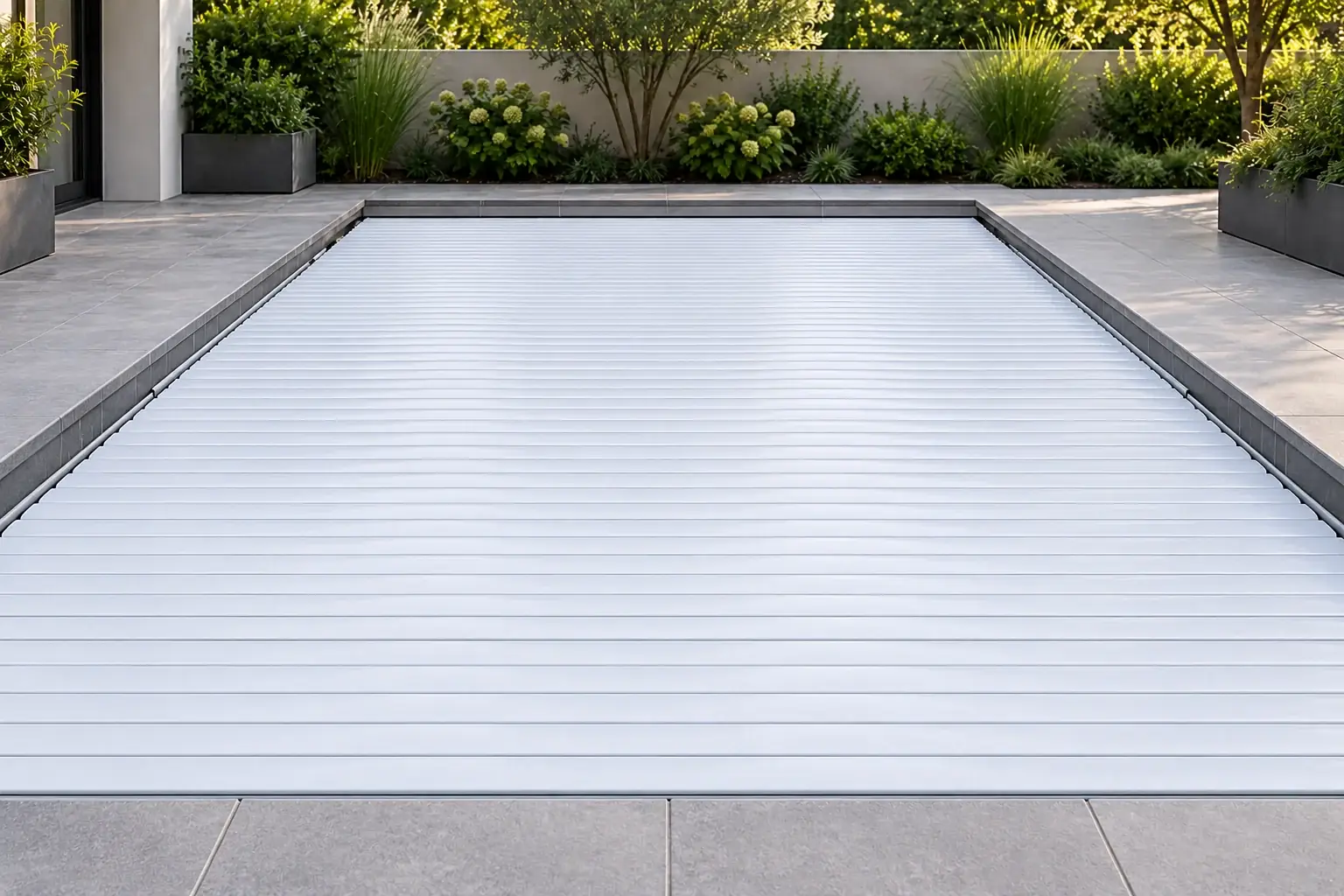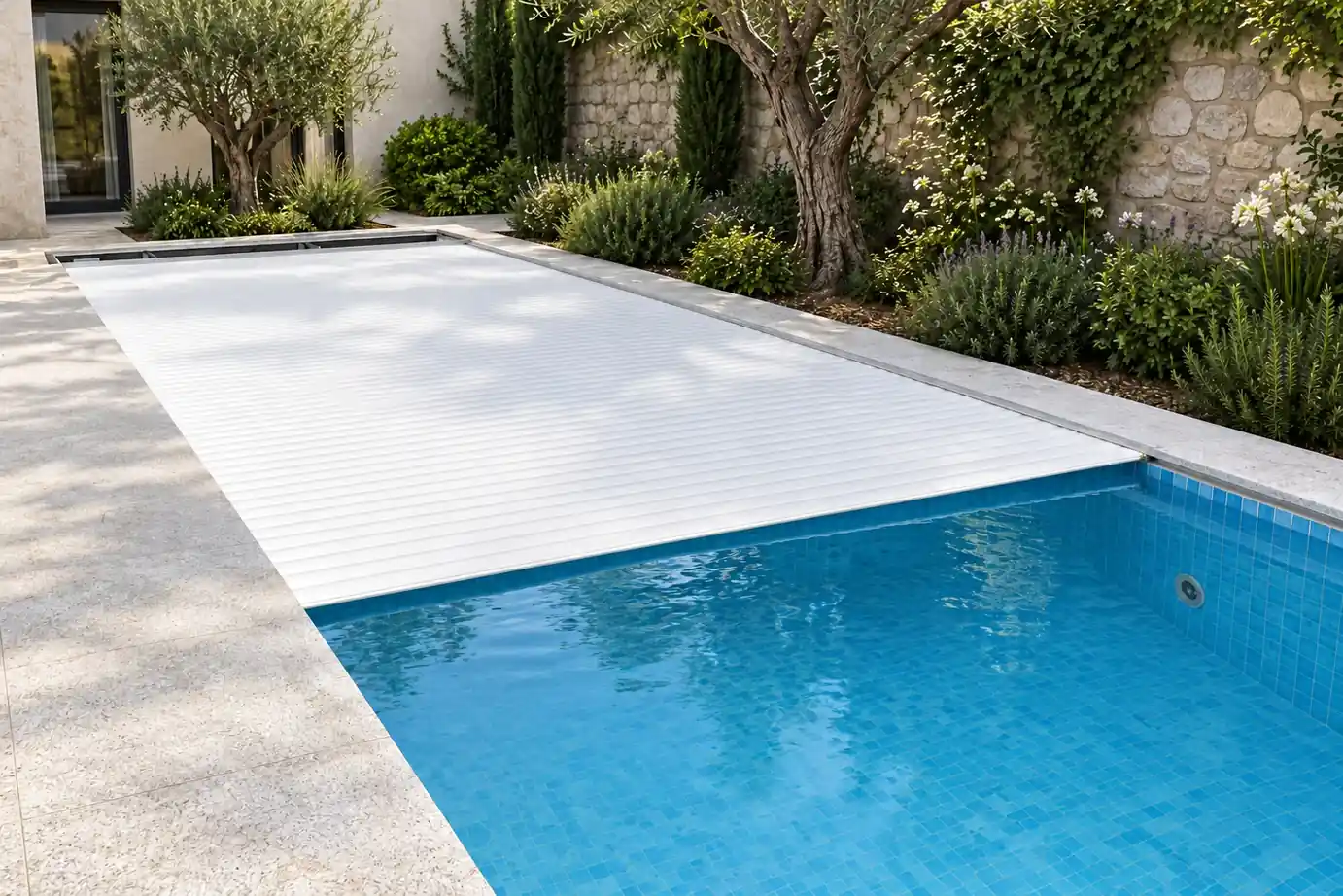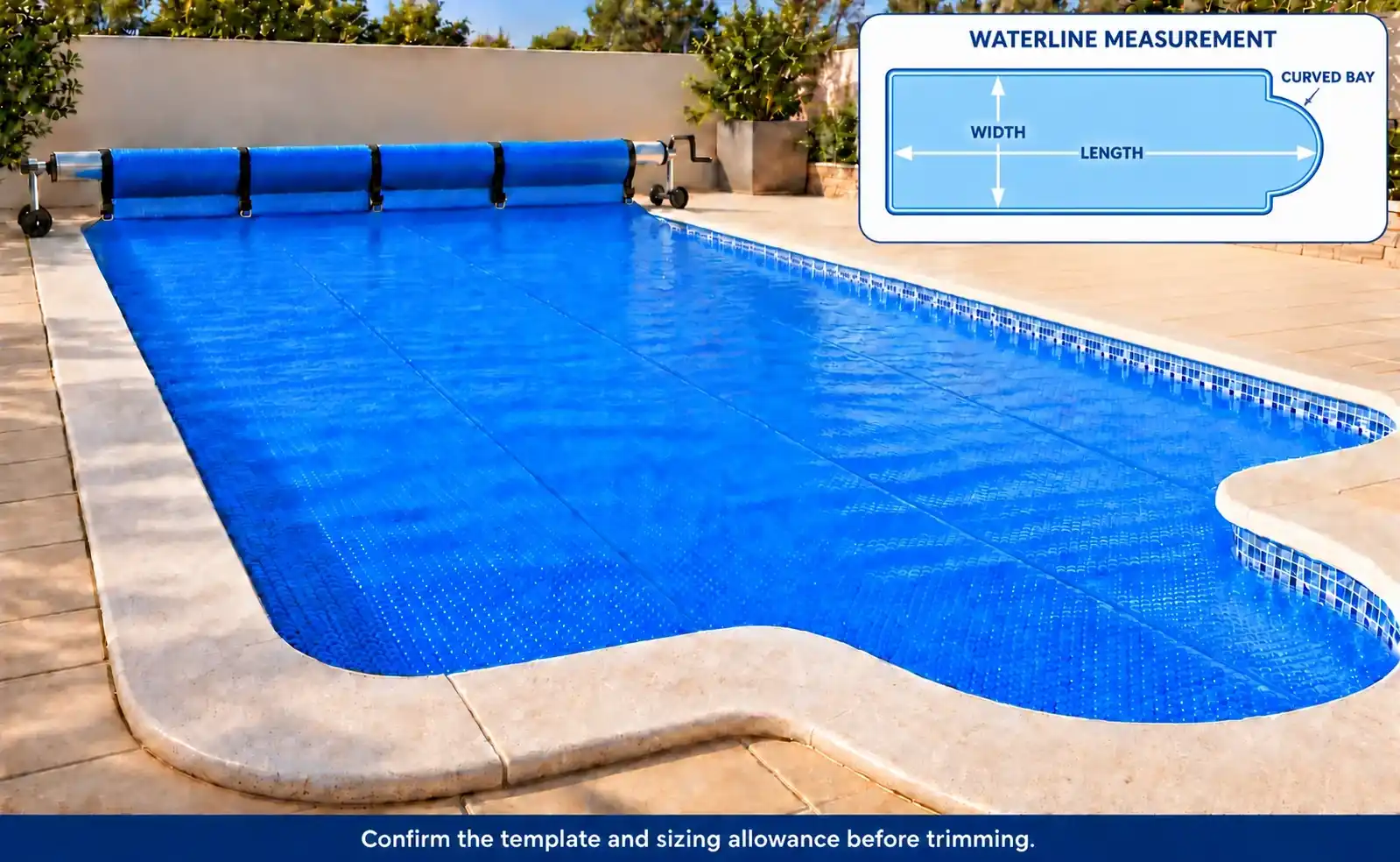
First, decide what your pool cover needs to do. You may want to keep the water warm, block leaves or make daily opening easier. Then check the pool shape, the space around it and your budget.
This guide helps pool professionals, dealers and owners compare the main cover families and prepare a useful first inquiry. Product performance, safety claims and included components must always be confirmed for the specific system.
Start with the job your pool cover needs to do
Swipe or scroll to see the full table →
| Your priority | Options to investigate | Check before deciding |
|---|---|---|
| Reduce evaporation and heat loss | Solar blankets, foam covers, slatted or other thermal covers | Material, handling, storage and documented performance |
| Open and close frequently | Manual, electric or automatic retractable systems | Pool geometry, operating space, access and power |
| Restrict access to the water | A specific safety cover system with appropriate supporting documentation | Applicable requirements, anchoring, installation and correct use |
| Reduce leaves and prepare for seasonal closure | Winter covers or a suitable documented seasonal system | Climate, drainage, snow and maintenance instructions |
| Make use of the area when covered | A suitably designed sliding or folding deck | Structural design, permitted loads, foundations and parking space |
Covering a heated pool can reduce evaporation and associated heat loss, but savings vary with climate, pool use and the cover. The U.S. Department of Energy explains how swimming pool covers save energy. Decide which benefits matter most; no single design is automatically best for every project.
Compare pool covers by structure, material and operation
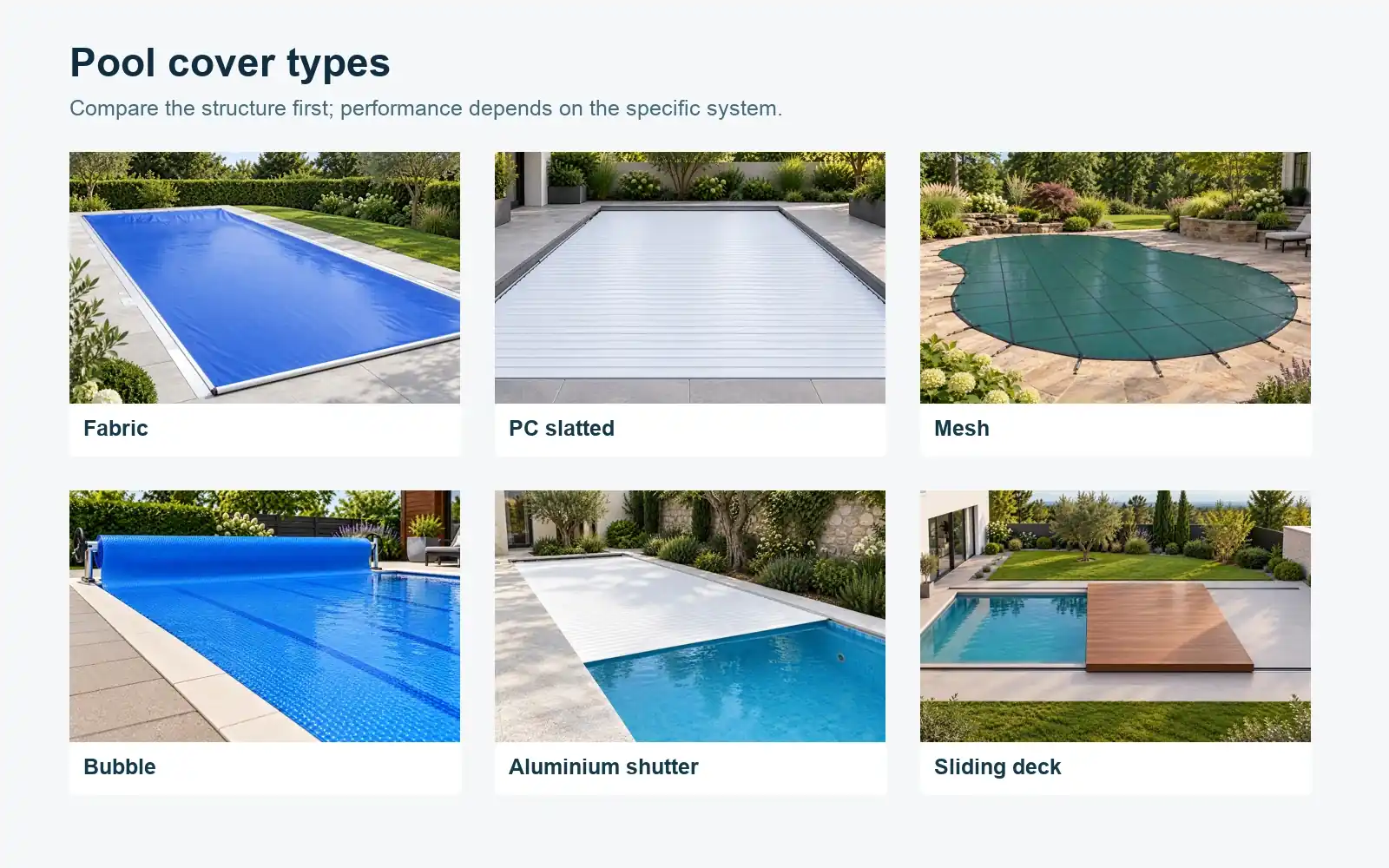
Product type illustrations; verify each model’s specifications.
Swipe or scroll to see the full table →
| Cover family | Common reason to consider it | Main project question |
|---|---|---|
| Retractable fabric | Convenient operation and coverage | Where will tracks, roller and housing fit? |
| Mesh or solid safety cover | Seasonal coverage and, where verified, safety performance | Can the perimeter be anchored as required? |
| Solar, bubble or foam blanket | Thermal management and comparatively simple handling | How will the blanket be handled and stored? |
| Polycarbonate slatted cover | Floating slats and a roller based system | Where will the roller go, and can the slats pass steps or obstructions? |
| Insulated aluminium shutter | A guided slatted structure | What support, guides and installation access are required? |
| Sliding or folding deck | A rigid structure that moves away from the water | Is there room for the full movement and parked structure? |
These categories overlap. “Automatic” describes operation, polycarbonate describes a material, and “safety” is a performance claim. An automatic pool cover is not automatically a safety cover. Likewise, pool covers for inground pools and above ground pool covers can require very different mounting arrangements. Confirm the actual pool construction and proposed system together.
Automatic and retractable pool covers
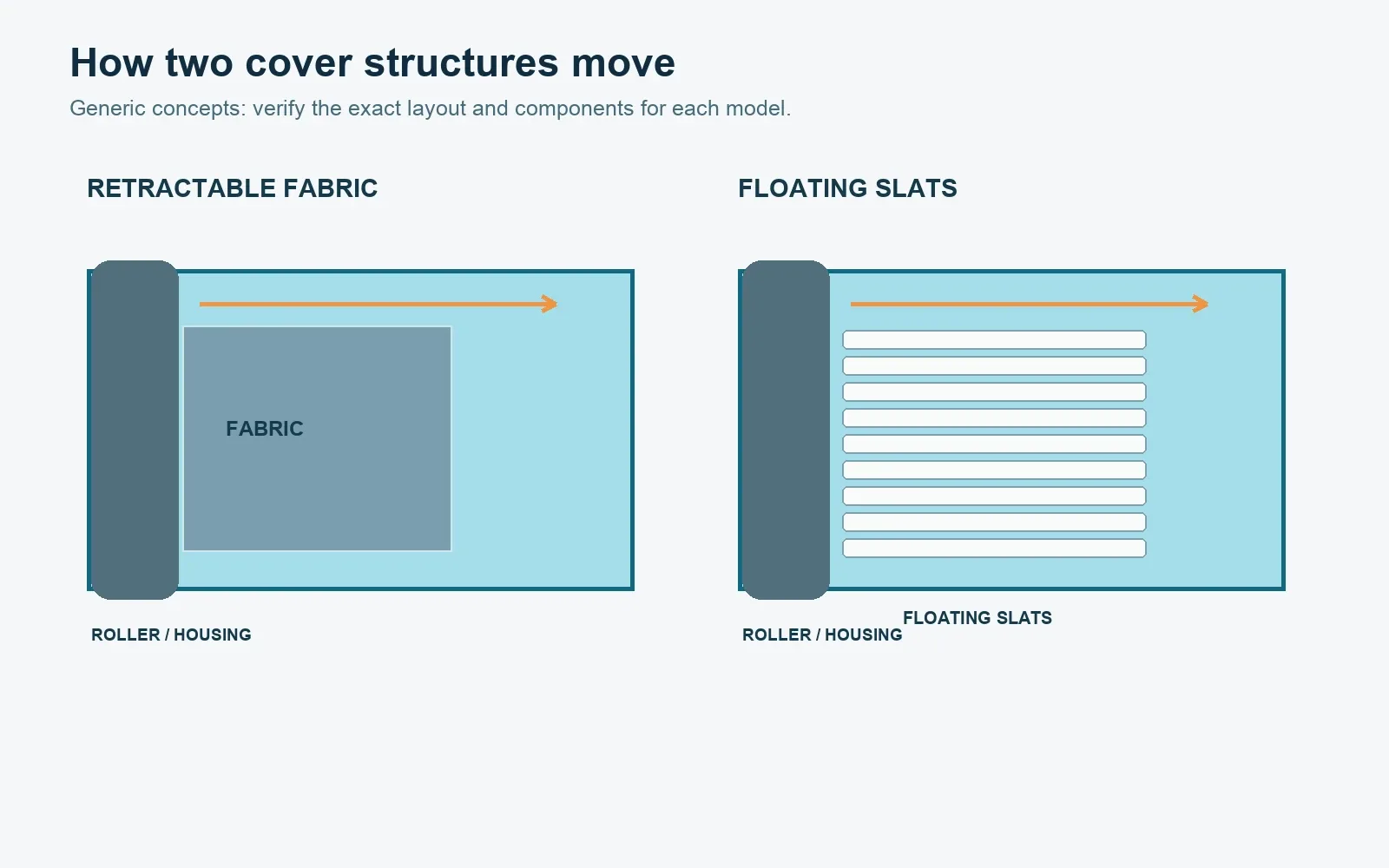
Illustrative layouts; the exact configuration is specific to the product.
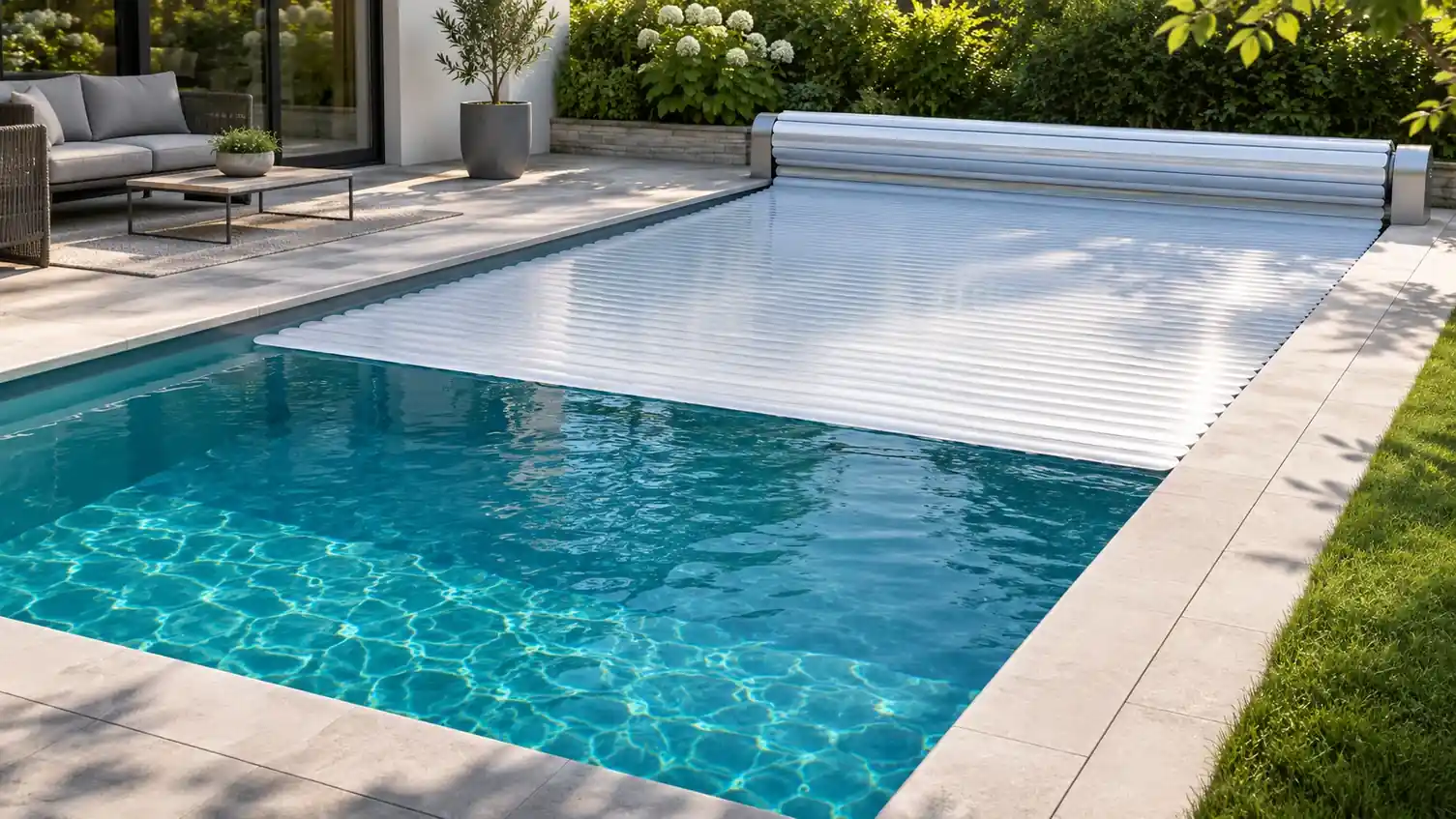
An automatic pool cover uses powered equipment to open and close the cover; a retractable pool cover describes the way it moves and can be manual or powered. Electric pool covers may be attractive where frequent use makes manual handling inconvenient. Check the exact control and operating arrangement with the supplier.
For automatic pool covers for inground pools, ask where the roller and any housing will sit, whether tracks or guides are needed, and how the installer will access the mechanism later. Retractable pool covers for inground pools may need additional planning around raised walls, step pockets, overflow edges and water features.
Automatic pool cover installation should be planned with the pool builder and the local installer. A rectangular opening can be easier to assess than an irregular one, but a simple outline alone does not prove compatibility.
For a new pool, discuss the cover before the deck and electrical work are finalised. For an existing pool, photograph the proposed route and storage location and ask whether modification is needed. A lower equipment price may not be the lowest installed cost if access, electrical work or rebuilding is substantial.
When is an automatic pool cover worth considering?
Compare how often the pool will be covered with the extra equipment, installation and future servicing. Daily convenience may justify a powered system; a rarely used seasonal cover may call for a different solution. Ask about replacement components, maintenance access and who will carry out local repairs before placing an order.
Pool safety covers: mesh vs. solid
A pool safety cover is a system, not just a fabric. Its cover, attachments and installation must be appropriate to the product and applicable requirements. Ask for documentation identifying the exact model and configuration. In the United States, ASTM F1346 addresses safety cover performance and labelling; check which requirements apply at the project location.
Swipe or scroll to see the full table →
| Question | Mesh pool cover | Solid pool cover |
|---|---|---|
| Rainwater | Permeable designs allow water through; verify the actual material | Water can collect; check the supplied drainage method or pump requirements |
| Debris | Typically stops larger debris; fine material can pass through | An opaque solid surface may block more debris and light, depending on construction |
| Installation | Anchors and deck conditions must suit the system | Anchors, drainage and deck conditions must suit the system |
| Maintenance | Inspect and clean according to instructions | Inspect, clean and manage standing water according to instructions |
Not every mesh pool cover or solid pool cover is a safety cover. Ask for the specific pool safety covers’ documentation, correct anchoring pattern and operating instructions. Safety testing and emergency load provisions do not make a cover a deck for ordinary walking. Verify any walking or occupied deck claim separately. A cover does not replace responsible supervision or other locally required safeguards.
Solar pool covers, bubble, foam and slatted options
A solar pool cover or solar blanket for a pool is generally chosen to help manage heat loss and evaporation. A pool bubble cover is a familiar floating blanket format; foam pool cover products use different material and construction. Consider how the cover is removed, cleaned and stored, and whether a pool cover roller or pool cover reel is needed. A blanket must be completely removed before swimming; do not assume it provides a safety barrier.
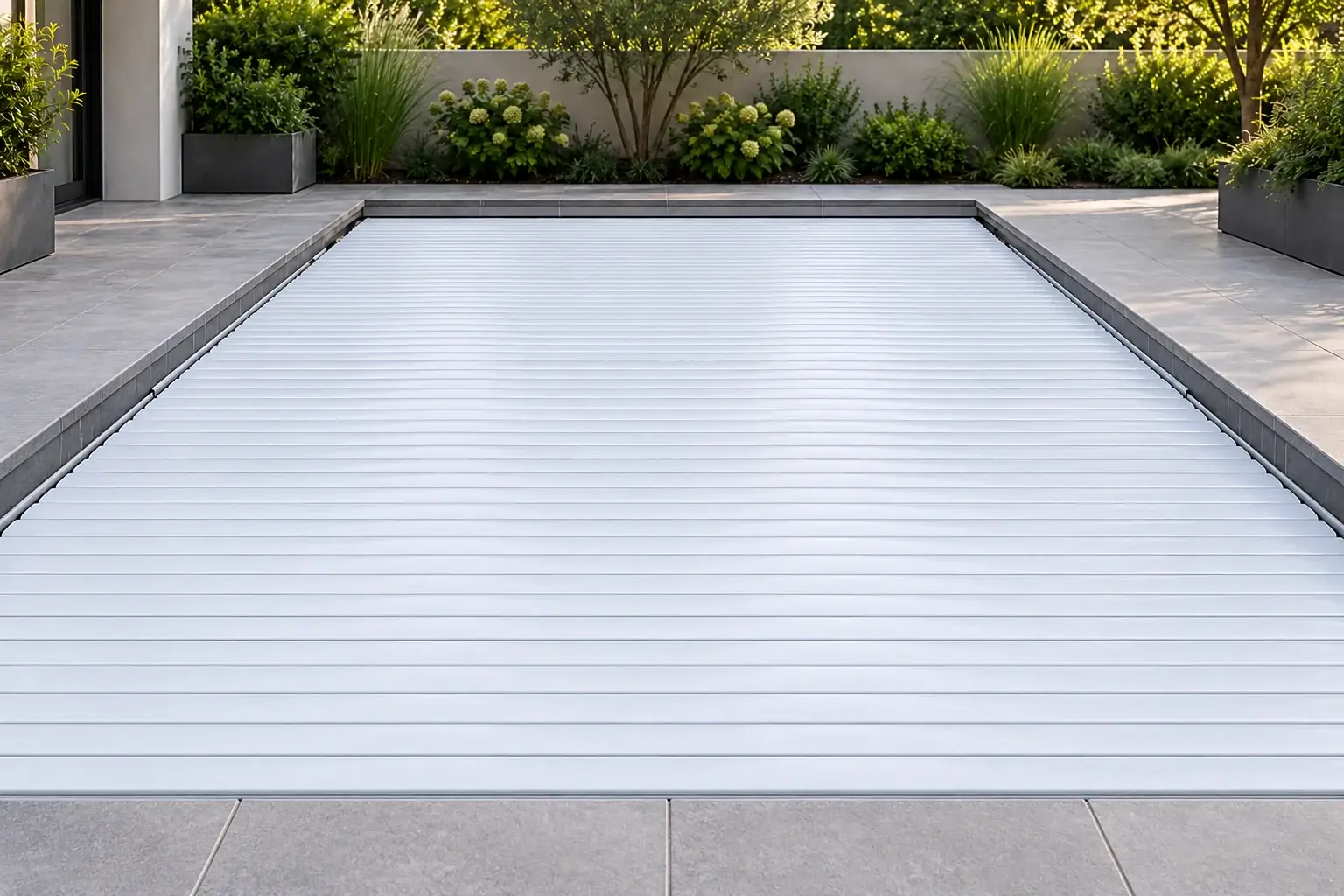
A polycarbonate pool cover uses connected slats rather than a flexible blanket. A polycarbonate slatted pool cover typically works with a roller; the exact mounting arrangement and motorisation depend on the system. Ask about profile specifications, colour, water level, roller access and how steps or irregular shapes are handled. Do not assume that every slatted product has the same thermal, safety or load performance.
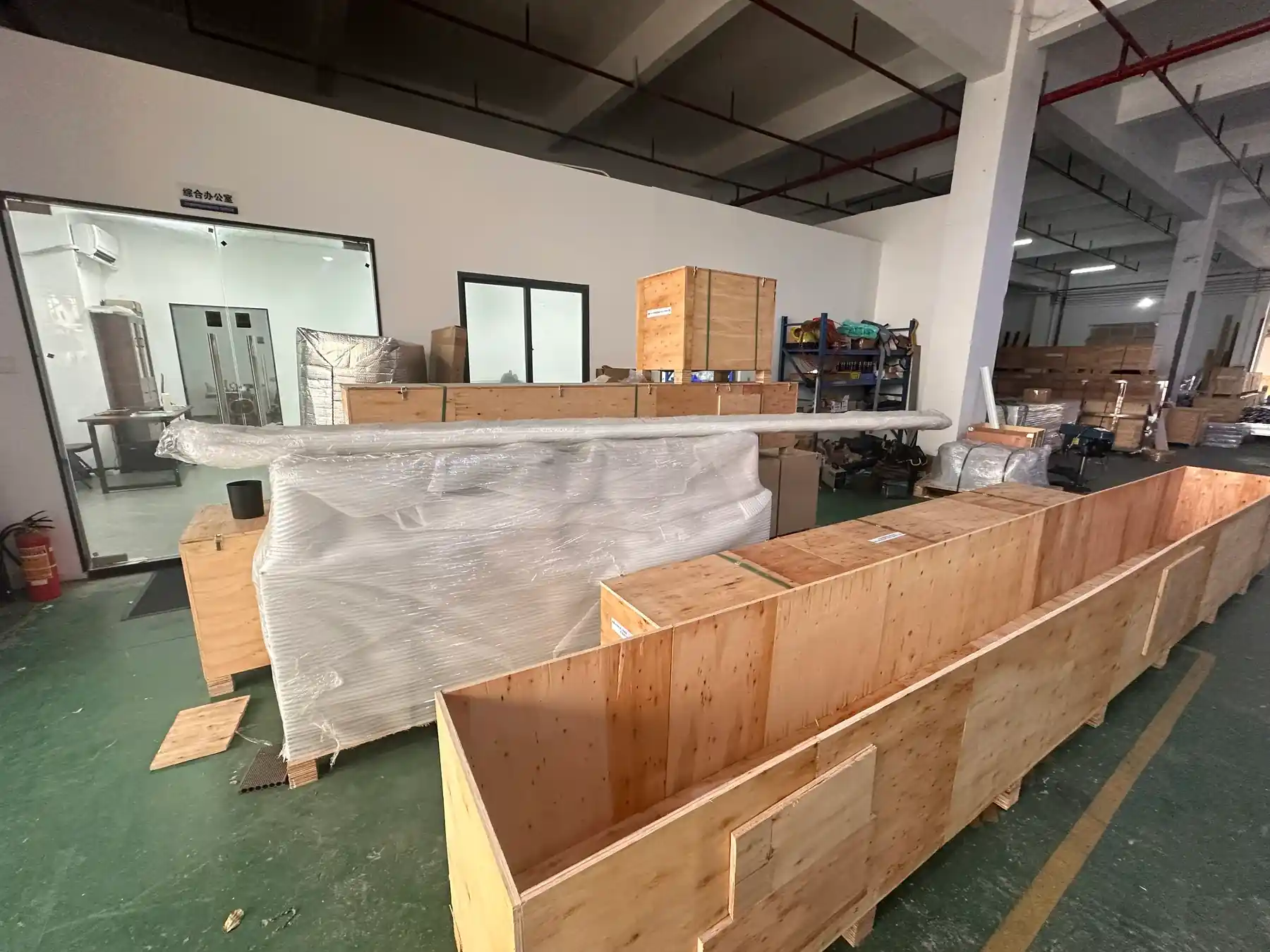
An insulated aluminium shutter is another slatted construction. Its guides, structure and operating arrangement should be reviewed for the individual project. For dealers comparing solar pool covers, bubble or foam products in volume, confirm available specifications, quantities, packing and shipping terms rather than assuming a single item retail offer.
Sliding and folding pool deck covers
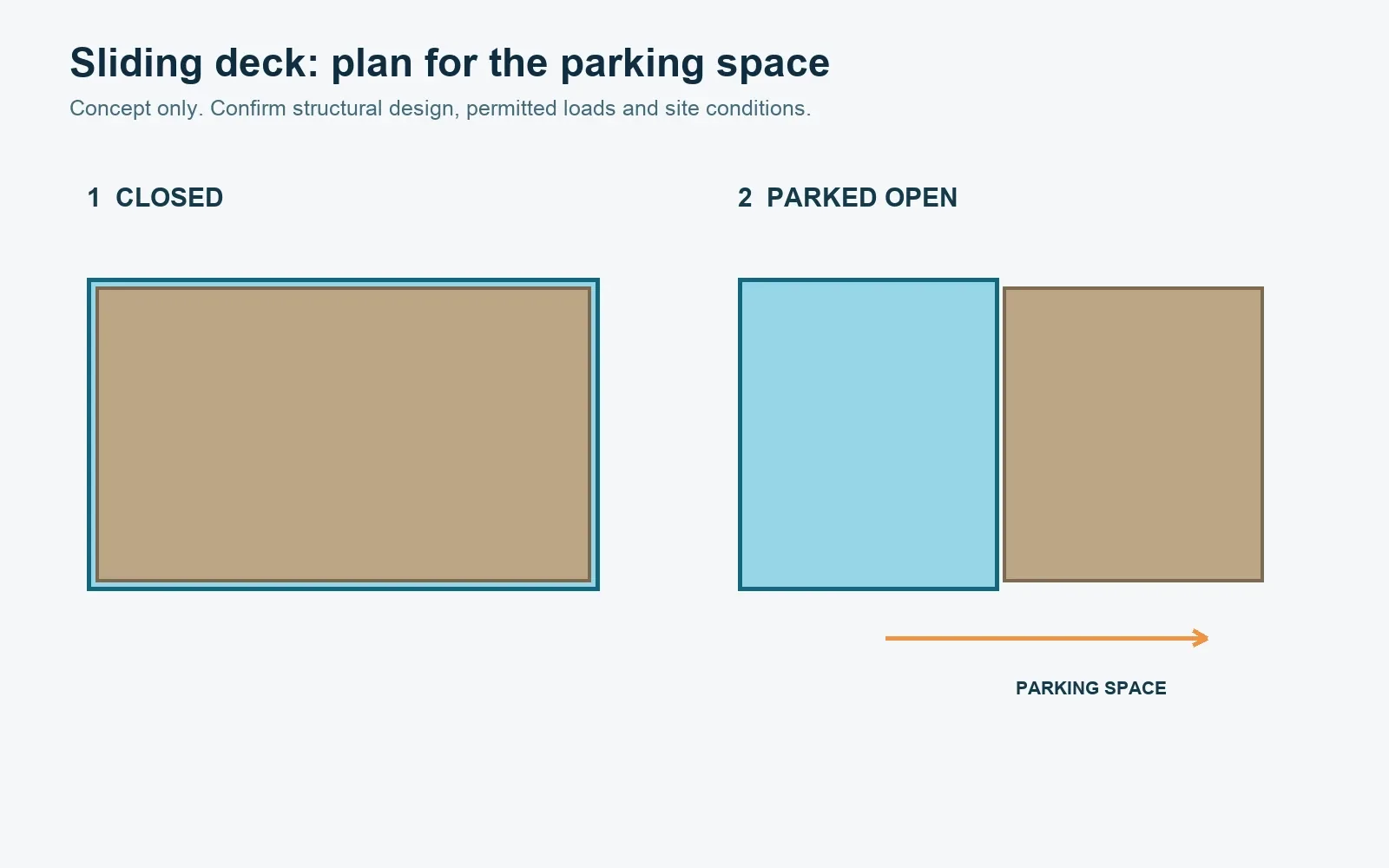
Concept only; confirm movement, support and permitted load for the project.
A sliding deck pool cover moves a rigid deck structure away from the opening; a folding system has a different movement path. The closed footprint is only half the planning problem: measure the clear space needed throughout movement and where the structure will park. Check adjacent walls, levels, drainage, foundations and access for maintenance.
If the owner expects to use the closed surface as a deck, request the structural design, permitted load, support and operating conditions for that particular configuration. A pool deck cover should not be described as walkable solely because it looks rigid.
Pool cover cost: what is included?
Pool cover prices vary with size, shape, structure, drive, site work and destination. Pool cover installation cost also depends on the local work and the installer’s scope. The automatic pool cover cost in a quotation for equipment alone cannot be compared directly with an installed price. Ask every supplier to separate:
- Cover surface, roller, guides or tracks, drive, controls and fixings.
- Packing, freight, destination charges, duties and taxes where applicable.
- Local electrical work, foundations, deck alterations, drainage and installation.
- Commissioning, documentation, replacement parts and future service.
Ask which items are included, excluded or still provisional. A low initial automatic pool cover price can become a higher project total if site work or freight is omitted. For a more detailed checklist, see what to confirm in a pool cover quotation.
Check shape and space before requesting a quote
Custom pool covers depend on more than the water opening. Record the pool’s approximate length and width, shape, steps and fixed obstacles. Show the proposed roller or mechanism location and photograph both ends of the pool. For a sliding deck, show its entire movement route and parking space.
For example, two pools with the same water dimensions may need different systems if one has an overflow edge or a wall where the roller would otherwise sit. Send a sketch and photos before assuming that a standard rectangle pool cover will fit. Our pool measurement guide explains the initial information to collect.
What should dealers and project buyers confirm?
Ask for a written configuration and component list for the actual inquiry. Confirm the quantity, delivery destination, installation documents, available remote guidance, spare parts arrangements and terms.
Identify who will perform local installation and electrical work. PoolCoverKits can discuss a configured kit and provide installation information and remote guidance; local installation arrangements must be confirmed for each project. Warranty, certification and component details should be checked against the specific quotation and supporting documents.
Three project examples: how the choice changes
Daily use at a new rectangular pool. A contractor can coordinate an automatic pool cover with the pool builder before the deck is completed. Confirm the roller location, access for servicing, power supply and any track details before approving the design. A retractable pool cover may be convenient, but compare the complete equipment and local work scope first.
A retrofit with a waterfall and limited deck space. Start with photographs and a side view sketch. A custom pool cover may be possible, but the waterfall, raised wall and roller location can change the configuration. Ask whether the cover can pass the feature and whether alterations are needed; do not assume that water dimensions alone settle the question.
A seasonal closure in a rainy climate. Compare pool safety covers and winter pool covers on their actual drainage, anchoring and maintenance instructions. A mesh pool cover and a solid pool cover handle water differently. Ask who removes leaves and standing water, how often inspections are needed, and how the cover is stored after reopening.
Compare the lifetime decision, not only the purchase price
Before choosing pool covers, consider who will operate them, how often the mechanism will be used, whether a damaged component can be replaced, and where spare parts will come from.
Ask the supplier to identify routine cleaning, inspection and expected service tasks in its instructions. Do not assume an automatic pool cover repair is included in a kit quotation, or that a local repair provider is available in your area.
For a dealer evaluating an automatic pool cover, ask whether replacement slats or fabric, motors, controls and fasteners can be sourced for the proposed configuration, and how compatibility will be checked.
For a project buyer, identify who pays for transport, installation and subsequent site visits. These questions help compare two pool covers with different initial prices on a on the same basis basis; specific availability and terms need written confirmation.
When is a cover pump relevant?
If rainwater can collect on a cover, ask how it is removed, who supplies the pool cover pump if required, how it is powered and what routine checks are necessary.
Mesh pool covers and solid pool covers have different drainage characteristics, but the actual instructions depend on the product. An automatic pump does not eliminate the need to inspect the cover and follow its instructions.
Frequently asked questions
What is the best pool cover for an inground pool?
The best pool covers for inground pools depend on your priority, geometry and available space. Start with the comparison above, then check the proposed system against the site and its documented performance.
Is a solar pool cover a safety cover?
Do not assume so. A solar pool cover is commonly chosen for thermal management. Only treat a specific cover as a safety system when its documentation and installation satisfy applicable requirements.
Are above ground pool covers the same as inground pool covers?
Not necessarily. Pool wall construction, access and fixing points differ. Confirm compatibility with the pool and cover manufacturer.
Do I need a pool cover pump?
Some solid covers need a way to remove accumulated water. Follow the exact product instructions and ask whether a pool cover pump is supplied or must be purchased separately.
Do I need a separate winter pool cover?
It depends on the cover, local climate and manufacturer’s winter instructions. Ask about snow, freezing, drainage and maintenance before relying on an existing system for winter.
Prepare your first inquiry
Send your pool shape, approximate dimensions, location or delivery destination, photos and intended use. Tell us whether this is a new build or retrofit, your preferred cover type if known, and whether you are a dealer, contractor or owner. PoolCoverKits can review the information with you and identify what is needed for a preliminary quotation.
Free Inquiry